Enter a public URL
Choose the relevant checker and submit a public website address.


Run focused checks for health, SSL, search indexability, robots and sitemaps, and AI readiness. Get a useful point-in-time result first, then recheck after a fix or monitor important sites in PulseWMS.
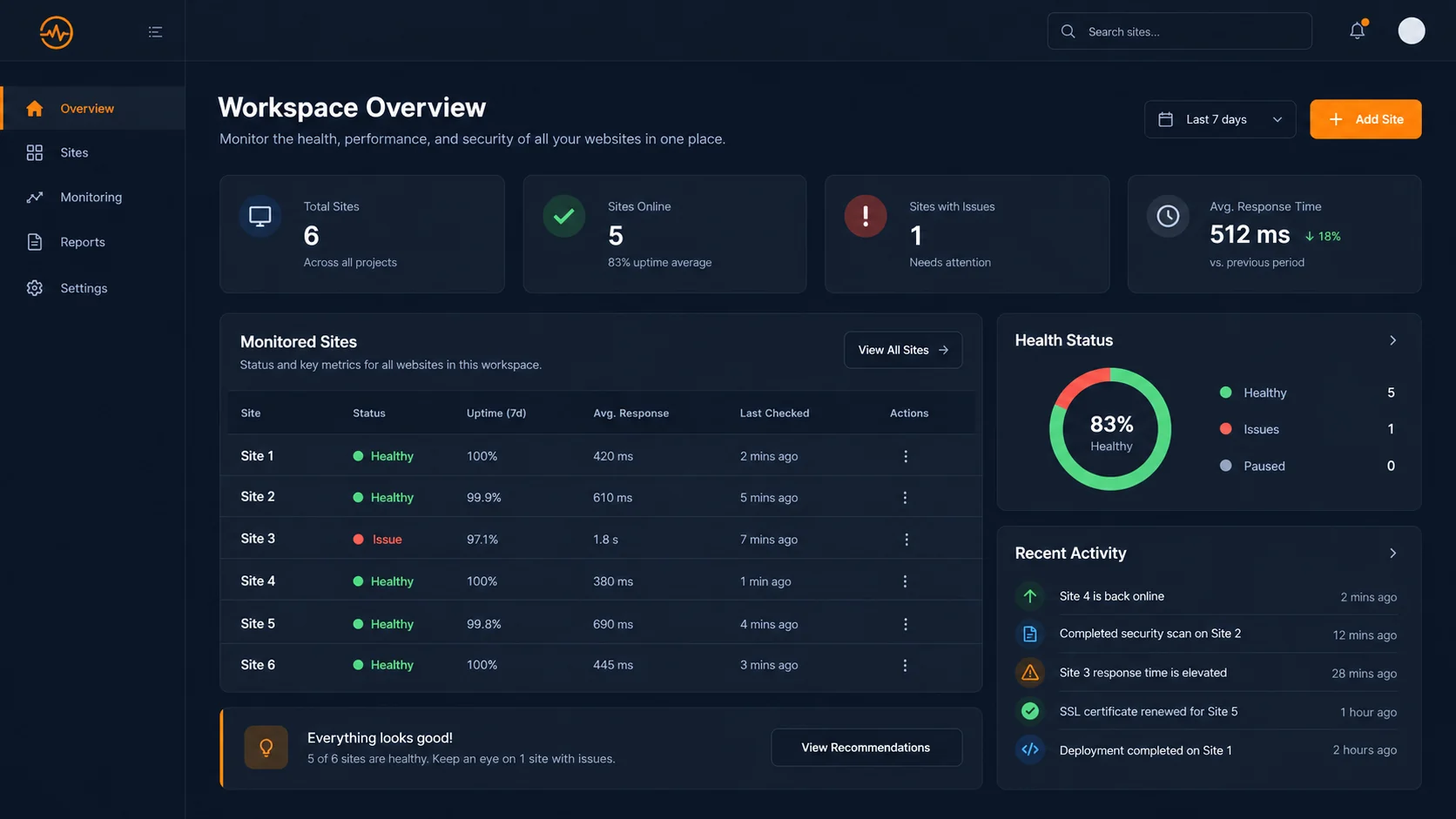
PulseWMS public tools provide focused, point-in-time checks for website health, SSL, meta and indexability, robots and sitemap discovery, AI-search readiness, and AI-crawler access. Each checker shows evidence, explains its result, and makes it easy to recheck after a change.
They do not imply Google indexing, AI citations, rankings, malware-free status, or future uptime unless the underlying checker explicitly measures that outcome.
Start with the question you need answered, then open the specialist checker built for that signal.
Review a bounded snapshot of availability, SSL, metadata, indexability, robots, and sitemap signals.
Check certificate availability and expiry on a public website.
Review existing public page metadata and robots directives.
Review public robots.txt and a declared same-host sitemap.
Review bounded public page structure and discovery signals without checking AI visibility.
Review bounded public page and robots access evidence without testing named AI crawlers.
A consistent four-step path from question to evidence to recheck.
Choose the relevant checker and submit a public website address.
Pulse evaluates only the signals that checker is designed to observe.
Read Passed, Warning, Failed, or Not checked states where they map to the backend.
Validate a change, then use monitoring when the same signal matters repeatedly.
Deployments, plugin changes, DNS updates, content edits, and server changes can alter a public signal. When a site matters, ongoing Pulse monitoring is a better complement to a manual spot check.
Explore PulseWMS Plans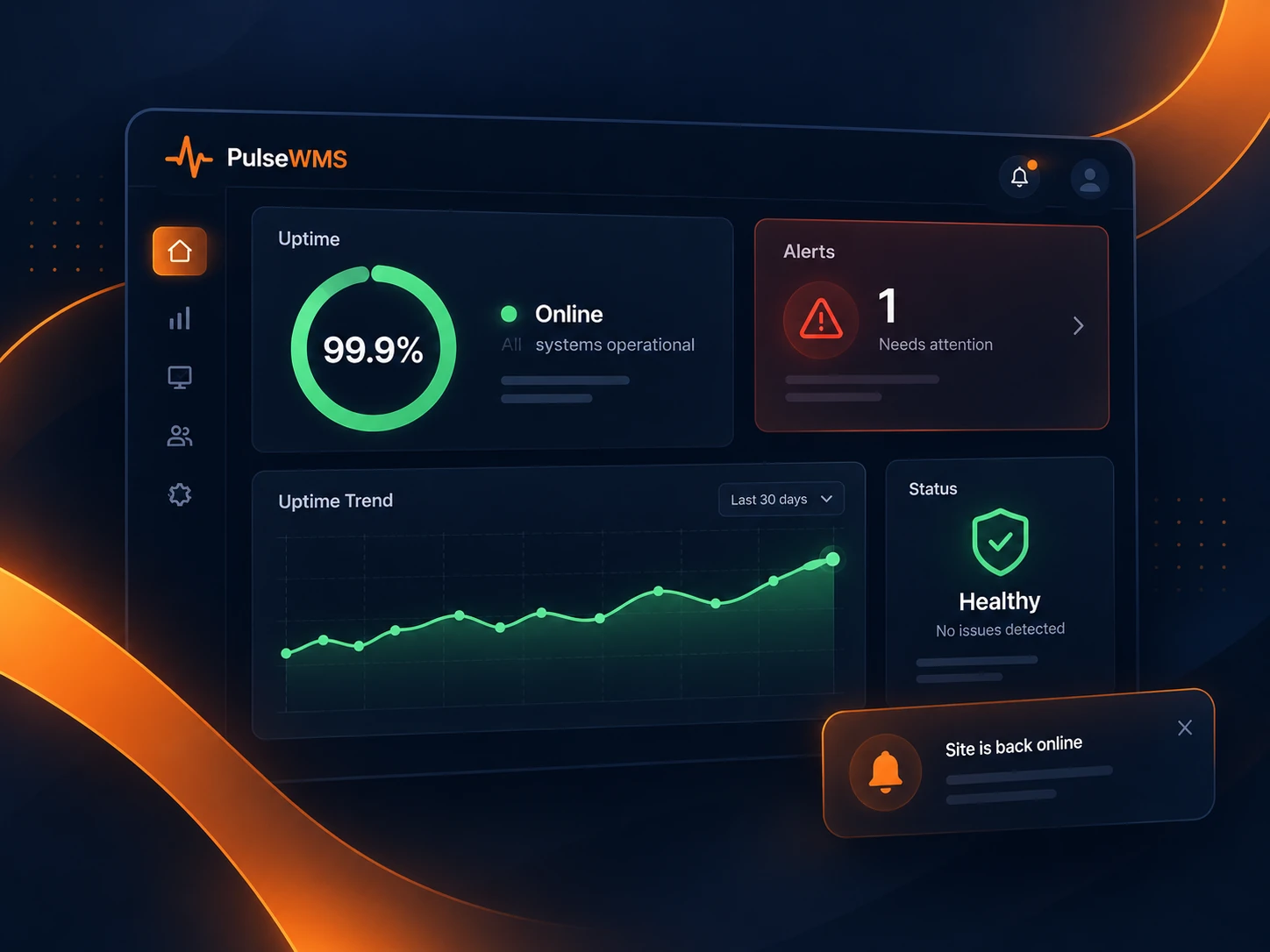
Get a focused starting point before changing a host, CMS, SEO plugin, or template setting.
Use public evidence to verify a deployment or technical configuration change.
Review crawl, indexability, metadata, and discovery signals without treating them as an indexing verdict.
Diagnose a client-site signal quickly, then use supported Pulse workflows when recurring oversight matters.
Use the checker that matches the question, then move to a specialist tool when the observed evidence needs more context.
Use a free tool to review one public state now. Use the supported Pulse workspace and monitoring workflow when repeat evidence, client-site oversight, and change awareness matter.
The public tools provide a bounded public snapshot without creating a tenant website record.
No. The tools describe only the supported public evidence shown by each checker.
Yes, when it is a public URL that passes the same safe validation used by the checker.
Recheck after a relevant CMS, hosting, DNS, CDN, certificate, template, or crawl-setting change.
Choose the focused checker that matches the question, review its bounded evidence, then recheck after a change.
Explore Free Tools